Copy by: Liv Maren Mæhre Vold / DigiKo
Photos: Svein Eggan
There are things in life that are universal. Gravity. Tide. The sun and moon. How strong love, generosity, and care stand, even through war.
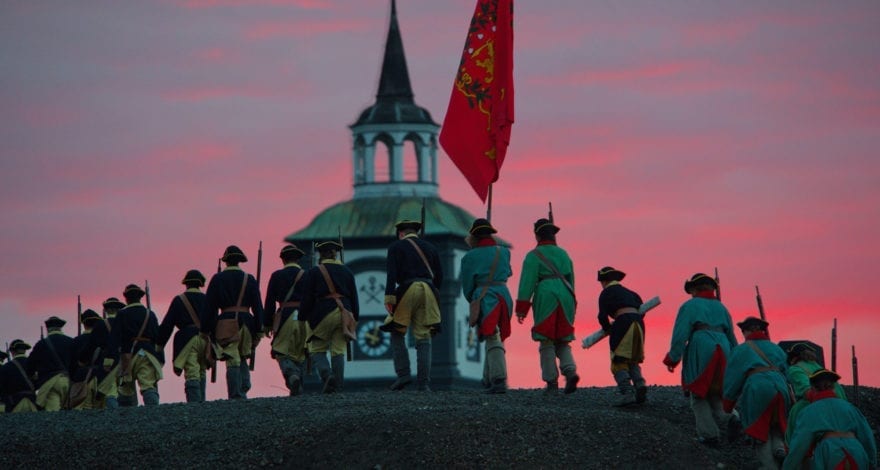
These are the essential themes of the outdoor theatre Elden in Røros. The dramatic, untold story of Norwegian was history. Everyone has heard of the Caroleans and the many thousands of soldiers that froze to death while retreating during the winter of 1719. Few know about the war history of the mining town Røros. This year marks the 25th anniversary of the outdoor theatre production, and the director of Elden 2019, Cathrine Telle, thinks this is Norway’s most spectacular outdoor scenery. Actor Jon Bleiklie tells about the slag heaps and the amphitheater as a panorama stage. For 25 years, more than 143 000 people have witnessed the story about Charles XII of Sweden, his conquests, and the stories that unfolded in the aftermath of a power-hungry king’s campaign. During the Great Northern War in 1718 and 1719, the Swedish king sent his men and General Armfeldt to conquer Trøndelag.
Elden’s leader, Siri B. Gellein, believes that the story of Elden is both an important part of history in Trøndelag and Røros, but also a universal story about war and love from the world throughout history.
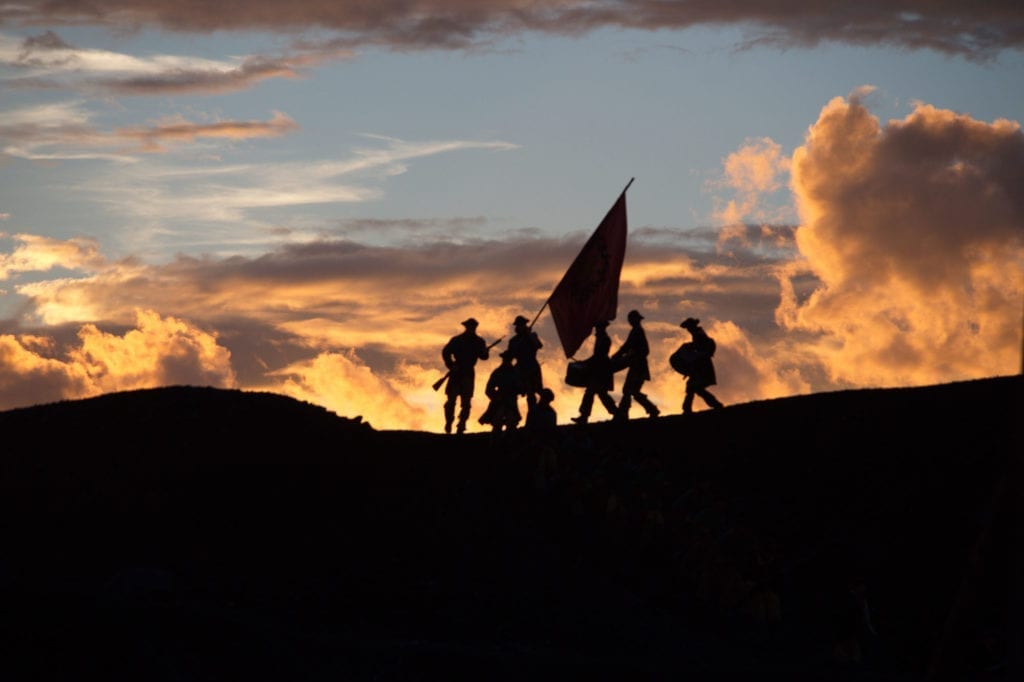
– This is a part of history that you won’t find in Swedish history books. The kind of Sweden sent his men to Røros to claim the copper – a crucial metal in warfare. For the people in Røros and the Swedish soldiers, this was more about friendship and neighbours, cousins and relatives. Many of De la Barre’s men were from Jämtland, and all of a sudden they were occupiers of their own neighbours and friends.
They were tired, hungry and freezing cold, Gellein tells about the many young soldiers. Boys, barely even men, some away from their homes for the very first time, in a war they didn’t ask for, started by a power-crazed king.
They arrive in a welcoming Røros. This is a story about a war no one wanted, and the friendships between soldiers, miners, and citizens.
Bertil Reithaug and Arnfinn Strømmevold’s play have moved its audience for a quarter of a century.
– One of the strengths of this play is that we change its creative team every third year, and each team gets free reins. The play itself has many opportunities for change. For instance, no one has talked about class society before. There’s a reason that poor Maren and the Mining Director Bergmann has such a great friendship, Gellein says.
– It takes a certain set of skills to handle this type of format – an outdoor theatre of this scale. When people see how other people’s lives are affected by great men’s visions, they are moved. How strong love and care stand, even in a situation like this. A plundered society is left behind. War has no mercy.
Elden tells a story about something fundamental in humans, Gellein says.
– You have to find something to survive find whatever gives you the strength to move on and live again. It’s about our survival instinct, as with children in Gaza playing football, laughing and having fun. They can’t only think of the bombs, they wouldn’t survive that way. The history books have largely overlooked and left out women and Samis as well, and Elden is an attempt to write these things into the history books, Gellein states.
– It is obvious that there have been strong women behind all this and that the Sami people in their way experienced the war too. This is fiction’s way of rectifying history books.
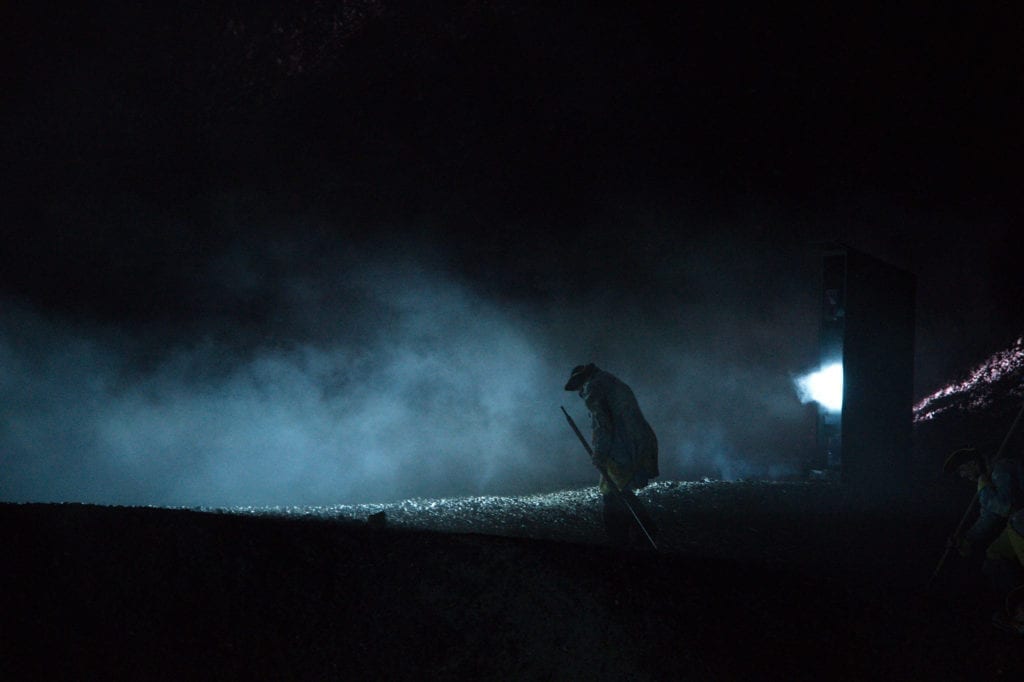
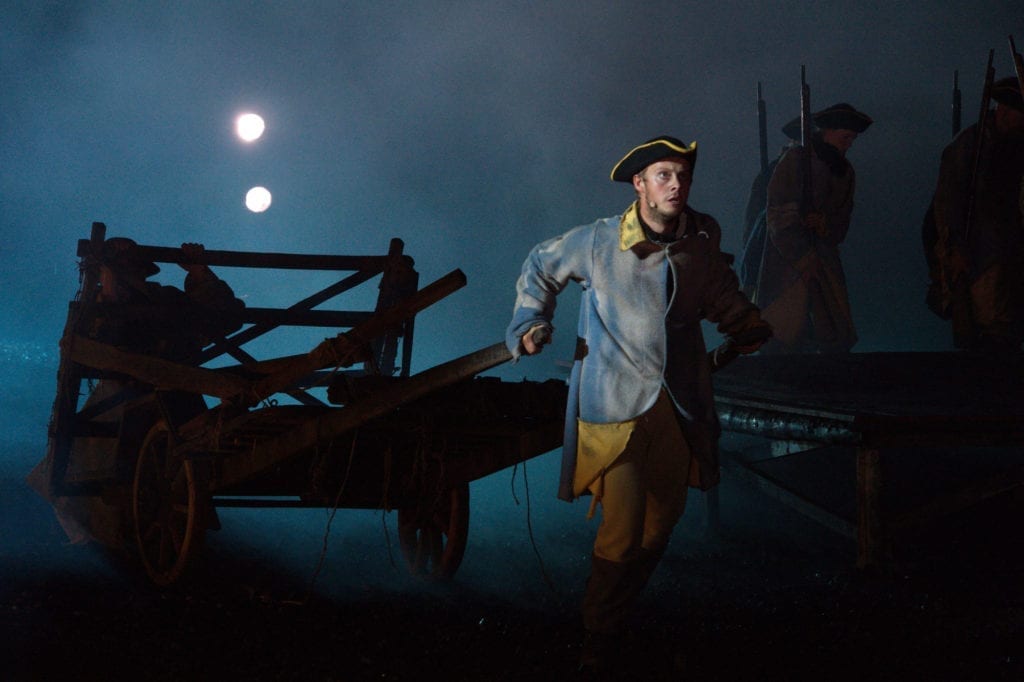
Like the town upon the slag heaps, Elden etches itself in between black soil and the remains of the mining history. The stage is monumental and close, and there’s something almost unnatural about where the stage on mining town is situated. The horses are equipped with special horseshoes in order not to damage their hooves. The actors will wear down their military boots throughout the course of the play. Nothing can be grown on the slag heaps – except the magical atmosphere of the theatre.
– 5 500 people live in Røros, and they also have to live alongside the Elden theatre. They tolerate and contribute. Some streets are closed for traffic. There’s horses, actors – there’s a lot. The professional actors that come here are speechless the first time they visit Røros, Gellein says. They are overwhelmed by the local effort and willingness to pull all of this together. They too know that this would be impossible without the pride and ownership the town has to this theatre, both on and off stage.
The audience figures for the Elden theatre have increased steadily over the years. Since the start, 143 532 people have bought tickets to Norway’s second-largest, and Trøndelag’s largest, outdoor theatre. The music and manuscripts give an endless amount of opportunities for new revisions, not only under each different director but every year. Folk music, rock, and pop versions have seen the light of day between the slag heaps in the mining town of Røros.
– If you’ve seen Elden once, you’ve seen it once. The musical experience is just as big as the theatrical experience, Gellein emphasizes.
It takes more than 300 people on and off stage to bring Elden to life. Next year’s tickets are released in August. The crew is set in October. The production manager will be announced in February, and in May they start rehearsing the new script before the crescendo increases in the summer and culminates in an explosion on the slag heaps at the end of July. When the actors go on stage for the first time, Gellein is calm.
– I am never afraid of the artistic side of the play. We have such a solid team of professionals and strong local contributors. It’s pretty astonishing that people go to the theatre and want to see war and death. But there are contrasts; love, happiness, and humor as well, Gellein says.
This is bloody serious, and something to smile off of. This is, after all, war and love.